
📢
Vidyarathee Publication Private Limited is dedicated to providing high-quality study materials for competitive exams, academic growth, and general knowledge. Our carefully curated content ensures that students have the best resources at their fingertips.
few millimeters annually and making the Himalayas one of the most earthquake-prone areas on the planet. The Himalayas are also a hydrological powerhouse, giving birth to 19 major rivers, including the Indus, Ganges, and Brahmaputra, which carve deep gorges and sustain vast populations downstream. Glaciers, some of the largest outside the polar regions, feed these rivers, shaping the landscape through erosion and deposition. The region’s complex topography and elevational gradients create a mosaic of ecological zones, from subtropical forests to alpine meadows and permanent snowfields. In summary, the Himalayas are a dynamic and evolving mountain system, shaped by powerful geological forces and characterized by unparalleled altitudinal diversity. Their physical grandeur
is matched by their significance as a source of water, biodiversity, and cultural inspiration for billions of people.
🔒
the youngest mountain ranges on Earth. This immense arc, spanning India, Nepal, Bhutan, Pakistan, and China, acts as a formidable barrier between the Tibetan Plateau to the north and the alluvial plains of the Indian subcontinent to the south. The range’s width varies from 200 to 400 kilometres, encompassing an area of approximately 595,000 square kilometres. Geologically, the Himalayas are the product of a dramatic and ongoing collision between the Indian and Eurasian tectonic plates. This process began around 50 million years ago, when the northward-moving Indian Plate collided with Eurasia, closing the ancient Tethys Ocean. The immense compressive forces caused the Earth’s crust to buckle, fold, and uplift, giving
rise to the towering peaks and deep valleys that define the region today. The Himalayas are divided into several parallel zones: the Outer Himalayas (Siwalik Range), the Lesser Himalayas, the Great Himalaya Range (Himadri), and the Tethys Himalayas, each with distinct geological histories and rock types. The Great Himalaya Range contains the world’s highest peaks, including Mount Everest (8,849 meters), Kanchenjunga, and Lhotse. These peaks are composed of ancient crystalline rocks, such as granite and gneiss, often capped by marine sediments—evidence of their oceanic origins. The region remains tectonically active, with the Indian Plate continuing to move northward at about 5 centimeters per year, causing the mountains to rise a
responsible travel, advocacy, or support for community-led conservation. Real change in the mountains begins with listening, humility, and a willingness to work together.
From Publication
The Himalayas are an irreplaceable natural, cultural, and hydrological asset. As a publisher committed to advancing knowledge and fostering global citizenship, we believe that protecting the Himalayas requires urgent, sustained, and inclusive action across sectors and borders. This book is part of our ongoing effort to support interdisciplinary research, amplify local voices, and promote ethical storytelling. We encourage readers to engage critically with the material, to seek out further learning, and to recognize their own role in the stewardship of mountain environments. May this
volume serve as both a source of inspiration and a call to collective responsibility, ensuring that the waters, wildlife, and cultures of the Himalayas endure for generations to come.
Chapter 1
∼•∼
Geography and Geology of the Himalayas
The Himalayas, stretching over 2,400 kilometres from the Indus River in the west to the Brahmaputra in the east, form the highest and one of
that follow traverse the region’s geography, biodiversity, cultural heritage, historical milestones, environmental challenges, spiritual traditions, and adventure opportunities. By integrating diverse perspectives and up-to-date data, this book aspires to foster appreciation, inspire responsible engagement, and encourage collective stewardship of this irreplaceable mountain system.
Message
From Writer
During my journeys and research across the Himalayan region, I have been continually humbled by the mountains’
grandeur and the wisdom of the communities who call them home. My work has been shaped by listening—whether to the stories of elders mapping ancient springs, the observations of scientists monitoring glacial retreat, or the aspirations of young guides eager to share their heritage with the world. This book is the result of collaborative inquiry, fieldwork, and dialogue with local leaders, conservationists, and scholars. It is dedicated to the people of the Himalayas, whose resilience and ingenuity offer hope for a sustainable future. I hope readers will approach these pages with curiosity and respect and that the stories and science herein will inspire not only wonder but also action—whether through
Preface
∼•∼
The Himalayas stand as one of the world’s most awe-inspiring natural wonders—a living testament to the power of geological forces, the resilience of ecosystems, and the enduring spirit of human cultures. This book was conceived with the aim of offering readers a comprehensive, accessible, and ethically grounded exploration of the Himalayas, weaving together the latest scientific research, cultural insights, and firsthand accounts. In an era marked by rapid environmental change and increasing global interconnectedness, understanding the Himalayas is more urgent than ever. The chapters
Cover
1
Pg 1
2
Pg 2
3
Pg 3
4
Pg 4
Back
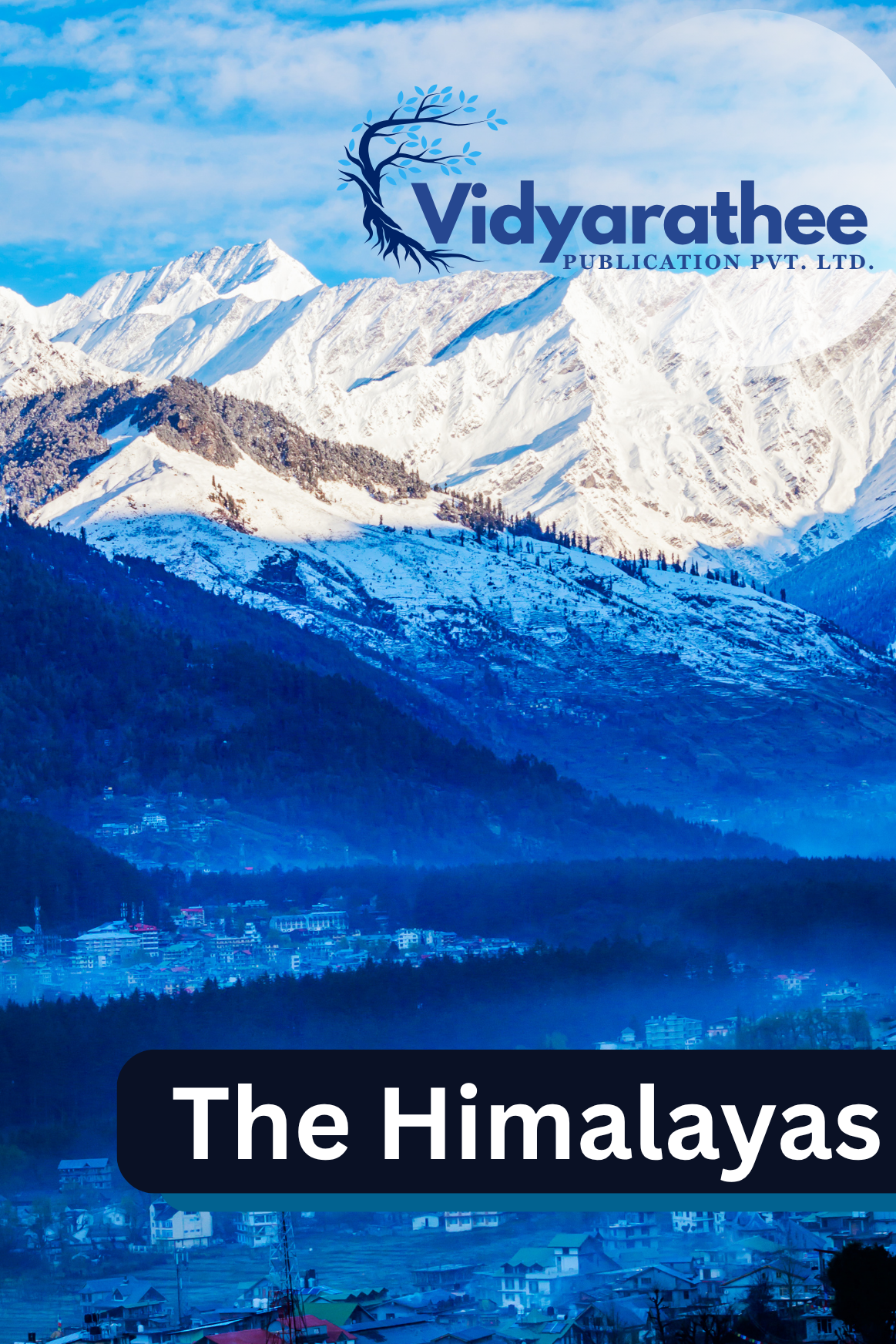
The Himalayas
₹99
⚡ Instant Digital Delivery to Library
📱
This eBook can only be read directly within our secure interactive Reader App.
SKU: BK-00035
About this Book
The Himalayas, a majestic mountain range stretching across Asia, embody nature’s grandeur and human resilience. With snow-capped peaks, diverse cultures, sacred traditions, and ecological richness, they inspire awe, spirituality, and adventure while symbolizing timeless harmony between humanity and the natural world.
Customer Reviews
⭐
No reviews yet
Be the first to share your thoughts on this book!
More by Vidyarathee
View All ➔
Vidyarathee PublicationPvt. Ltd.
Vidyarathee Publication Private Limited is dedicated to providing high-quality study materials for competitive exams, academic growth, and general knowledge. Our carefully curated content ensures that students have the best resources at their fingertips.
Vidyarathee Publication Private Limited is dedicated to providing high-quality study materials for competitive exams, academic growth, and general knowledge. Our carefully curated content ensures that students have the best resources at their fingertips.
to providing high-quality study materials for competitive exams, academic growth, and general knowledge. Our carefully curated content ensures that students have the best resources at their fingertips. Vidyarathee Publication Private Limited is dedicated to providing
high-quality study materials for competitive exams, academic growth, and general knowledge. Our carefully curated content ensures that students have the best resources at their fingertips.
Private Limited is dedicated to providing high-quality study materials for competitive exams, academic growth, and general knowledge. Our carefully curated content ensures that students have the best resources at their fingertips. Vidyarathee Publication Private Limited
is dedicated to providing high-quality study materials for competitive exams, academic growth, and general knowledge. Our carefully curated content ensures that students have the best resources at their fingertips. Vidyarathee Publication Private Limited is dedicated

Vidyarathee Publication Private Limited is dedicated to providing high-quality study materials for competitive exams, academic growth, and general knowledge. Our carefully curated content ensures that students have the best resources at their fingertips. Vidyarathee Publication
Vidyarathee PublicationPvt. Ltd.
Vidyarathee Publication Private Limited is dedicated to providing high-quality study materials for competitive exams, academic growth, and general knowledge. Our carefully curated content ensures that students have the best resources at their fingertips.
Vidyarathee Publication Private Limited is dedicated to providing high-quality study materials for competitive exams, academic growth, and general knowledge. Our carefully curated content ensures that students have the best resources at their fingertips.
to providing high-quality study materials for competitive exams, academic growth, and general knowledge. Our carefully curated content ensures that students have the best resources at their fingertips. Vidyarathee Publication Private Limited is dedicated to providing
high-quality study materials for competitive exams, academic growth, and general knowledge. Our carefully curated content ensures that students have the best resources at their fingertips.
Private Limited is dedicated to providing high-quality study materials for competitive exams, academic growth, and general knowledge. Our carefully curated content ensures that students have the best resources at their fingertips. Vidyarathee Publication Private Limited
is dedicated to providing high-quality study materials for competitive exams, academic growth, and general knowledge. Our carefully curated content ensures that students have the best resources at their fingertips. Vidyarathee Publication Private Limited is dedicated

Vidyarathee Publication Private Limited is dedicated to providing high-quality study materials for competitive exams, academic growth, and general knowledge. Our carefully curated content ensures that students have the best resources at their fingertips. Vidyarathee Publication
Share Book
Scan QR to open on mobile
OR
